AutomateFollow-up · 4 min read
“Just checking in” is not a follow-up system
By the Stride IT team
Replace scattered messages with an owner, a recorded action and a clear follow-up date.
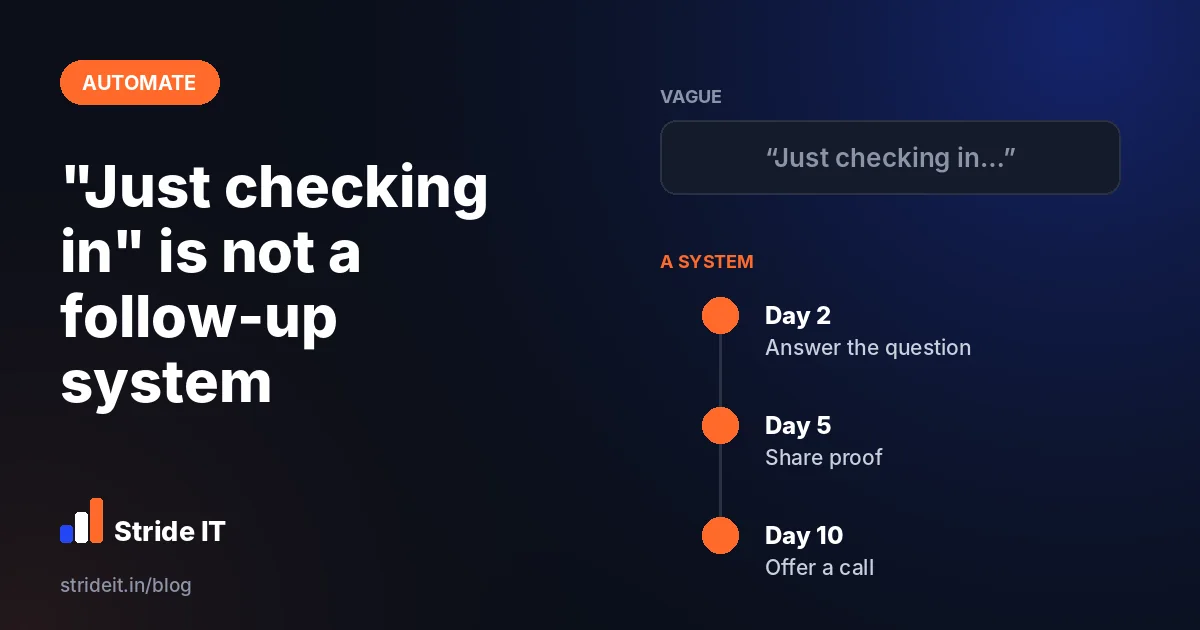
You sent the quote on Monday. By Friday there is no reply, so you send a message: "Just checking in." It is polite, it is easy to write, and it is easy to ignore. For the customer it adds no information and asks for nothing specific.
The problem is not the message. It is that checking in is all you have. There is no system behind it.
Why vague follow-ups fail
- They give the customer no reason to answer. Nothing new was offered and no clear question was asked.
- They depend on someone remembering. When work gets busy, the follow-up is the first thing dropped.
- They are not recorded. Nobody can tell what was sent, when, or what comes next.
What a follow-up system looks like
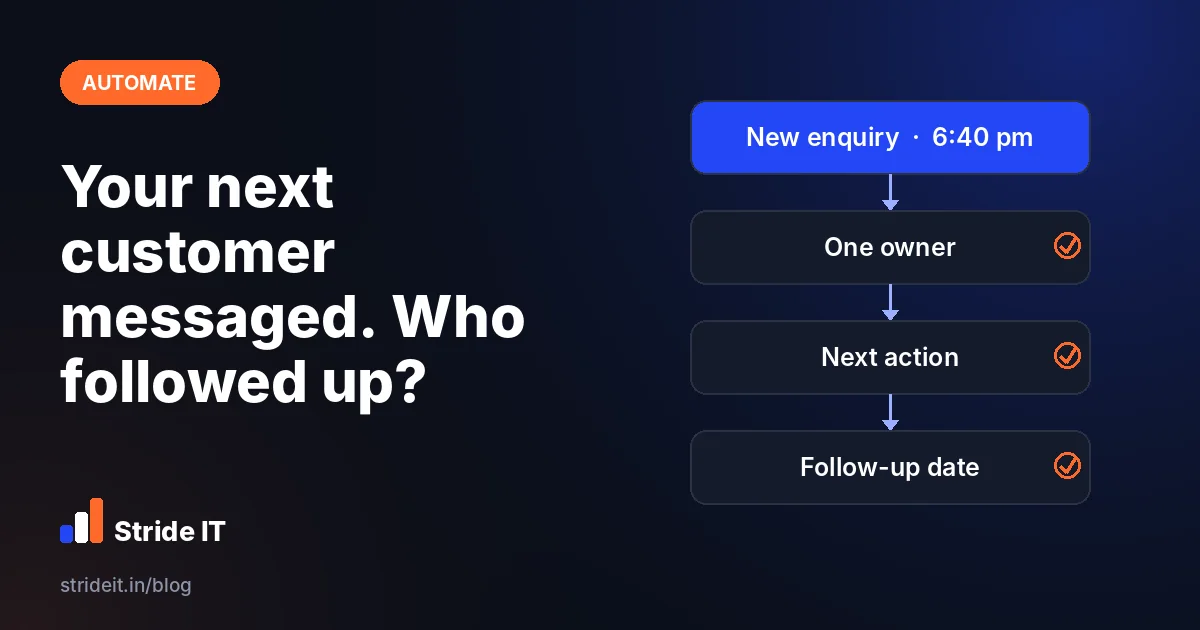
It has three parts, and they are simple:
- An owner. One person is responsible for each open lead.
- A recorded action. What was done, and what will be done next.
- A clear follow-up date. When someone will look at this lead again.
With those three in place, a follow-up becomes a task with a due date, not a vague intention.
Give every message a reason
A useful follow-up usually does one of these:
- answers a question the customer is likely to have,
- adds something helpful, such as an example, a short explanation or a clearer breakdown,
- asks one specific question that is easy to answer,
- mentions a real deadline, such as a schedule or availability.
"Do you need the quote in a different format?" gives someone something to reply to. "Just checking in" does not.
A sample rhythm after a quote
Adjust this to your business and customers. It is an example, not a rule:
- A couple of days after sending: confirm it arrived and offer to answer questions.
- A few days later: share something useful related to their request.
- About a week or more later: politely ask whether to keep the quote open or close it for now.
That last message is often the most useful. It makes it easy for the customer to say "not now" or "yes, let's go", and it tells you where the lead really stands.
Record how each lead ends
Mark each lead as won, lost or paused, and note why. Over a month this shows whether you lose on price, timing, silence or something else, and that tells you what to improve.
Let tools carry the reminders
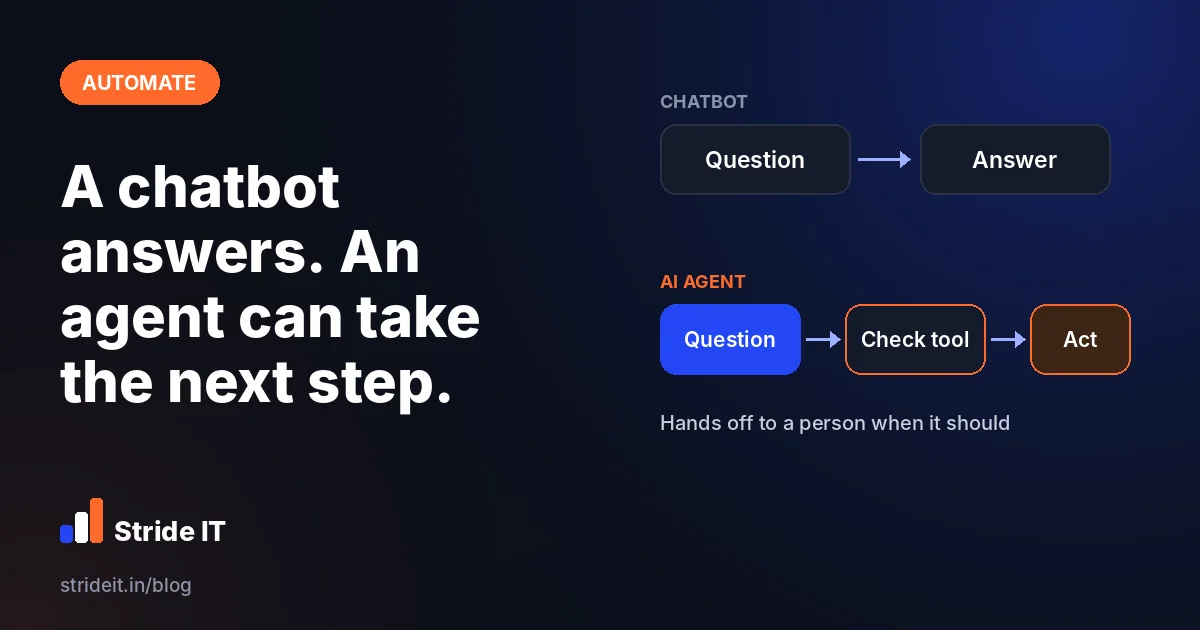
A spreadsheet can hold owners, actions and dates. As volume grows, a CRM can send reminders automatically and show what is overdue. A CRM manager AI can go further by drafting follow-up messages for a person to approve, so nothing is sent without a human check. If you want gentle reminders on a schedule, email marketing and automation can keep past enquiries warm without anyone retyping the same message.
Before and after: the same follow-up, two ways
Vague: "Hi, just checking in on the quote. Let me know if you have any questions."
Specific: "Hi Ravi, the quote I sent covers the website and the monthly maintenance. Would you like me to separate the two so it is easier to compare? I can also hold the start date for you until Friday."
The second message is no longer, but it does three things: it shows you remember the details, offers something useful and gives a clear reason to reply.
Mistakes to avoid
- Following up too often. A reason for every message keeps it from feeling like pressure.
- Giving up after one attempt. Many decisions simply take time and other priorities come first.
- Not closing the loop. An open lead with no end date clutters your list and your thinking.
- Using the same message for everyone. A quick personal detail makes a large difference.
Frequently asked questions
Why does "just checking in" usually fail?
It gives the customer no reason to answer, it depends on someone remembering, and it is not recorded, so nobody can tell what was sent or what comes next.
What are the parts of a simple follow-up system?
An owner (one person responsible for each open lead), a recorded action (what was done and what happens next), and a clear follow-up date.
What makes a follow-up message useful?
A reason to reply. It answers a likely question, adds something helpful, asks one specific question that is easy to answer, or mentions a real deadline.
How should I follow up after sending a quote?
One example rhythm: a couple of days after sending, confirm it arrived; a few days later, share something useful; about a week or more later, ask whether to keep the quote open or close it for now. Adjust it to your business.