BuildOperations · 4 min read
What is slowing your business down?
By the Stride IT team
Identify whether your biggest bottleneck is enquiries, follow-ups or delivery.
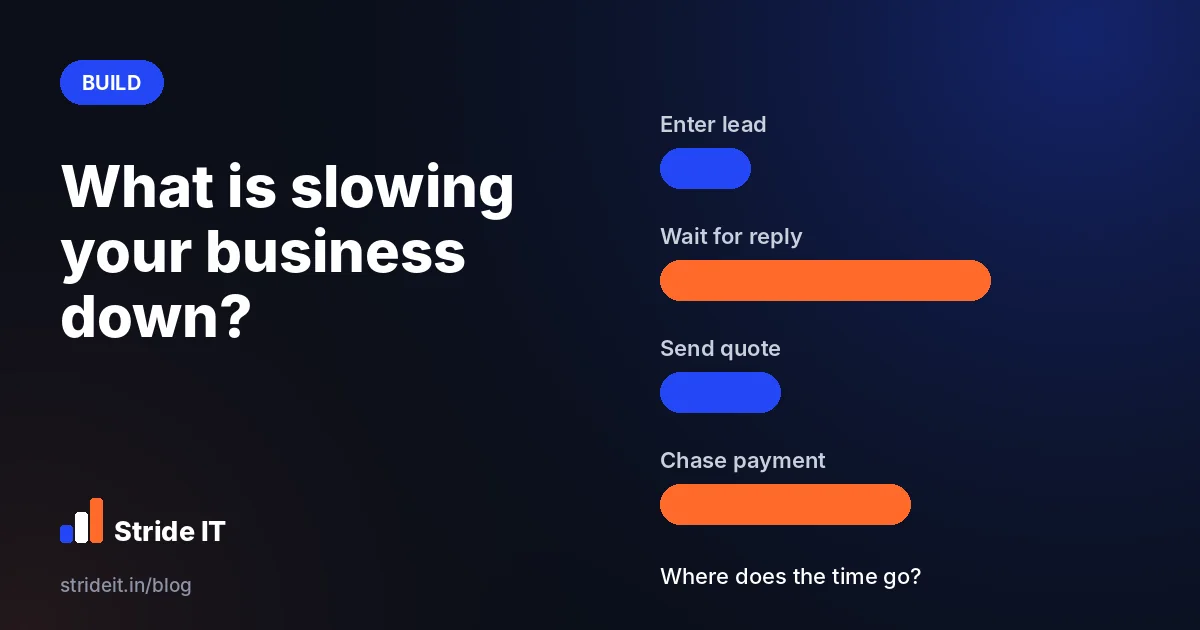
When a business feels slow, the instinct is to fix everything: more marketing, new software, extra staff. That spreads effort thin and rarely works. A better first step is to find the one place where the work is actually getting stuck.
Three places work usually gets stuck
- Enquiries. Not enough of the right people are getting in touch.
- Follow-ups. Enquiries arrive but do not turn into decisions.
- Delivery. Won work is late, repeated or done with too much effort.
Most businesses have a bit of all three. One of them is usually the biggest constraint. Fixing a smaller problem first will not move your results much.
Questions to find your bottleneck
Enquiries
- Do we have quiet weeks where nothing comes in?
- Do we depend on one source for most of our leads?
- Are the enquiries we get a good fit, or mostly the wrong people?
Follow-ups
- Do leads go quiet after the first reply or quote?
- Can we see which leads are overdue for a response?
- Do we know why we lose the ones we lose?
Delivery
- Do jobs run late or need rework?
- Do we chase people for information we need to start?
- Does the owner have to check everything before it moves on?
Look at a few numbers weekly
Keep them simple and write them down once a week:
- New enquiries received.
- Enquiries replied to within your target time.
- Quotes sent and decisions made.
- Jobs delivered on time.
A week of honest numbers usually points to the bottleneck faster than a long discussion.
What each bottleneck points to
- Few enquiries: a marketing question: Google Ads, social leads or a clearer website.
- Leads that leak: a process or system question: owners, next actions and a CRM that shows what is overdue.
- Slow or messy delivery: a workflow question: clearer steps and a dashboard of what is in progress.
Pick one and fix it first
Choose the constraint that matters most right now, make one change, and measure again in a few weeks. Fixing leads when delivery is the real problem will only make delivery worse. Fixing delivery when no enquiries come in will leave your team idle.
A worked example
A small service business is busy but cash is tight. The owner assumes they need more leads. A week of numbers shows something different: enquiries are steady, but about half of the quotes get no decision and several jobs finish late because customer details arrive piecemeal.
More advertising would have added more enquiries to a leaking process. The better first moves were a simple follow-up routine for open quotes and a checklist of what the customer must provide before work starts. Only after those were working did more marketing make sense.
Ask the people closest to the work
Your team often knows the bottleneck already. Ask three people, separately:
- What takes longer than it should?
- What do you have to chase other people for?
- What do you fix again and again?
Where the answers overlap, you have found something worth fixing.
When to bring in help
Some fixes are a change of habit. Others need a tool, a better website or a campaign that brings in the right people. If you have identified the bottleneck but are unsure whether it needs software, marketing or both, that is a good moment to talk to someone who does both. Stride IT works on the build side and the grow side with one team.
Frequently asked questions
Where does work in a small business usually get stuck?
In one of three places: enquiries (not enough of the right people getting in touch), follow-ups (enquiries that do not turn into decisions), or delivery (won work that is late, repeated or done with too much effort). One of them is usually the biggest constraint.
How do I find my biggest bottleneck?
Ask a few questions about each area and write down a few simple numbers weekly: new enquiries received, enquiries replied to within your target time, quotes sent and decisions made, and jobs delivered on time.
What does each kind of bottleneck point to?
Few enquiries point to marketing. Leads that leak point to process and systems, such as owners, next actions and a CRM that shows what is overdue. Slow or messy delivery points to workflow, such as clearer steps and a dashboard of what is in progress.
Should I fix everything at once?
No. Choose the constraint that matters most right now, make one change, and measure again in a few weeks. Fixing a smaller problem first will not move your results much.